 University of California San Francisco
About Our Lab
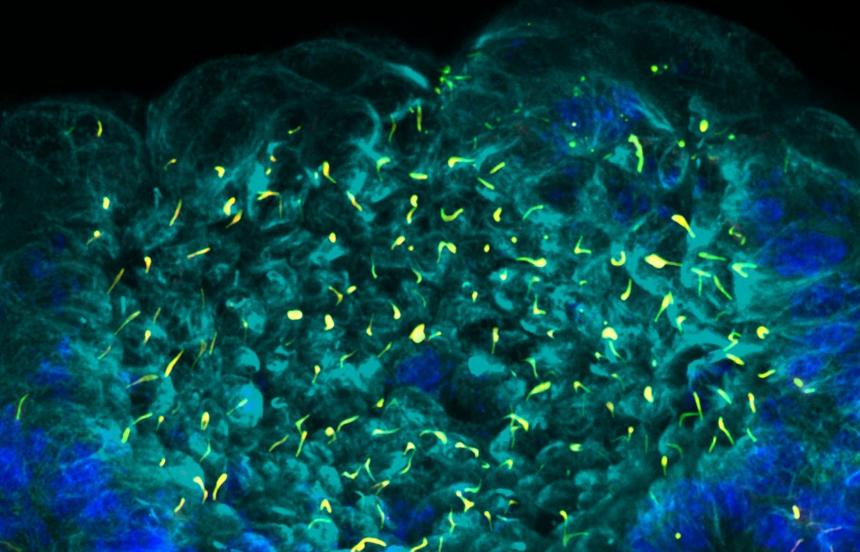
The Delling Lab, based in the Department of Physiology at UC San Francisco, studies how primary cilia—tiny, antenna-like organelles that project from nearly every cell in the body—sense and respond to their local environment. While cilia were long considered vestigial structures, we now know they serve as sophisticated signaling hubs, using specialized ion channels and G-protein coupled receptors (GPCRs) to detect chemical t cues and translate them into cellular responses. Understanding this signaling is essential not only for basic cell biology but also for human health: defects in ciliary function underlie a range of severe diseases, from congenital heart disease to autosomal dominant polycystic kidney disease (ADPKD).
Our research centers on the molecular mechanisms of ciliary calcium signaling. We aim to identify the environmental signals that activate polycystin channels within cilia, and to understand how the resulting electrical signals are decoded into biological outcomes. We are also working to identify small-molecule agonists and antagonists of ciliary ipolycystin channels, with the goal of developing novel therapeutics for ciliopathies such as ADPKD, and to characterize the diversity of ion channel composition across the many different types of primary cilia found throughout the body. In parallel we have developed the ciliary calcium chemogenetics channel (CiCaChem) approach, were we target nonselective cation channels with defined pharmacology to the primary cilium. These novel tools will allow to decipher the function of ciliary Ca2+ signaling in a variety of different organs, such as kidney epithelial cells and neurons.
To pursue these questions, we combine mouse genetics, RNA sequencing, live calcium imaging in primary cilia, electrophysiology, and biochemistry. This multidisciplinary approach allows us to move from identifying a signal or channel at the molecular level all the way to understanding its role in tissue- and organism-level physiology. Our foundational work identifying primary cilia as specialized calcium-signaling organelles will help to establish this now-active area of cilia biology research.
We welcome interest from prospective graduate students, postdoctoral fellows, and collaborators who are excited about ion channel biology, cellular signaling, and the intersection of basic science with disease mechanisms.